


Charts of the Week

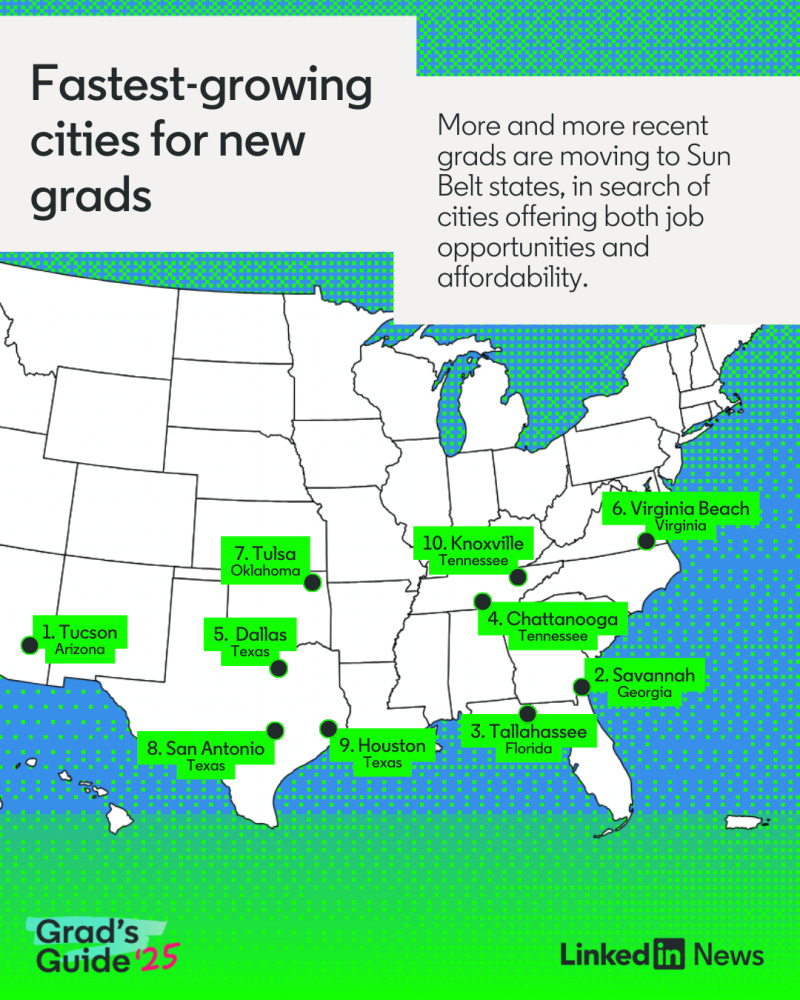
The Big 10:
A Fifth of American Adults Can’t Read. Here’s How to Teach Them. | The Free Press
Stunning. The fact that 48 million US adults can’t read at a 3rd grade level makes the United States appear as a 3rd world country. If you can’t read, it’s next to impossible to learn. Depriving people of learning is depriving people of living.
Gen Z says AI has made their college degrees irrelevant | CIO Dive
Satisfaction with the college degree has dropped like a stone over the past decade. In 2011, 86% of young people thought it was worth it, compared only 42% in 2023. If you have to take on debt? Only 22% said that was worthwhile in 2024. While AI might be the convenient scapegoat, this dissatisfaction was swelling long before ChatGPT hit the scene in November of 2022. There are lots of challenging inputs at play: soaring tuition prices, rising debt, and plummeting half-lives of skills…not to mention that many institutions have simply lost the plot of what higher education means. Add it up and it looks like an industry ripe for major disruption.
AI Could Help You Pivot to a New Career | The Future of Everything
If a tree falls in the forest and no one is there, does it make a sound? If a job exists that matches up well with a persons’ skillset but they don’t know about it, is that a missed opportunity? Of course it is. AI allows you to create your personal Hero’s Journey by better understand what your strengths and interests are. AI helps you find your calling and identify purposeful work by matching you to what you’re good at.
Roberts might hold key Supreme Court vote over first publicly funded religious charter school | AP
This week, as Roman Catholics fixed their eyes on the chimney atop the Sistine Chapel in the Vatican to learn of the newly selected Pope, other faiths and denominations are looking to Washington and the Roberts court for its ruling on whether religious charters are eligible to receive public funding. If you’re interested in this subject, First Liberty is the go-to organization on religious freedom…and we are not an authority, but our two cents is that the Constitution does not call for a separation between church and state, but that the state doesn’t force a religion on a people. Our four cents is that anything that grants greater access to quality education is a win for students, which we as a country desperately need.
☀️EP. 7 · Paul Escala: Superintendent of Catholic Schools, Archdiocese of Los Angeles | Edreform in 10
75% of US adults are in favor of school choice, which is another indicator that parents don’t have faith in public schools. But that’s not to say that parents don’t want faith in schools. Listen to ASU+GSV Fellow Paul Escala (Superintendent of Catholic Schools in the Archdiocese of Los Angeles) break down the topic of religious charters.
🏟️ 🎙️ S2 E4: Fanstake Just Raised $6 Million to Change College Sports Forever | Under the Number
Earthquakes and aftershocks. NIL (“Now It’s Legal”) is a catalyst for entrepreneurs and alumni alike to be involved in what has changed the landscape of college sports. Whether you like it or not, this genie is not going back in the bottle. Fanstake facilitates crowdsourced, grass-roots fundraising for athlete recruitment…with the added twist of a money-back guarantee if the mission is not accomplished (i.e., the athlete in question doesn’t pick your school).
CEOs push AI and computer science as a grad requirement | Axios
It’s become clear that for America and American business to compete in a global marketplace, we need to be the leader in computer science and AI. President Trump signed an EO last week, expanding AI education for America’s youth and workforce. Piling on this concept were the CEOs of America’s captains of industry who stated how computer science and AI need to be prioritized. The good news is students are already AI Natives who are pushing the AI innovation curve in almost unimaginable ways.
School districts say losing E-rate would have ‘catastrophic’ impact | K-12 Dive
E-rate (a.k.a. The Schools and Libraries Universal Services and Support Fund) is a cornerstone for schools having affordable Internet and broadband access. Somewhat remarkably, 93% of schools have Internet access—how in the world can we have schools in the United States of America in 2025 without Internet access? In 1996 when E-rate was established, 65% of schools had Internet availability, but that was 30 years ago and the Internet was pretty new. As with a lot of comms during the early days of Trump 2.0, people fear for the worst, but the reality is nobody wants schools to be less connected.
College Uncovered: The Student Trade Wars | The Hechinger Report
With an impending “demographic cliff” and decreasing government funding for US universities, international students are more important than ever. Last year, over 1.1 million international students were in US colleges and universities. The Trump Administration’s perceived hostility to foreigners, tariff talks, and trade wars have international students thinking twice about going to school here. The Chinese government has told its 277K students in U.S. universities to think three times.
🎙️ Ep. 44 · Live Data CEO Scott Hamilton | Ed on the Edge | Dash Media
Going back to the times of Plato, the few that had the privilege of knowledge were not in favor of expanding that access through the written word. Over 1,700 years later, when the Gutenberg printing press came about, the aristocrats who benefitted from their knowledge arbitrage through their exclusive, bespoke access to books and information, weren’t in favor of the invention. Today, the knowledge arbitrage that has benefitted few at the expense of many, is about to be disrupted off the face of the earth through AI. Introducing the concept of “The Data Grid”…enjoy my conversation with Live Data CEO Scott Hamilton.